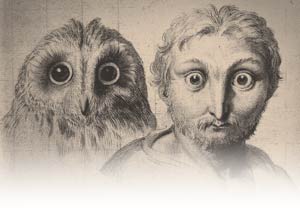
Our teachers at Carnegie Tech in Pittsburgh (now Carnegie Mellon) were superb. We were trained mostly in the classics, and a few contemporary plays. But while we received coaching in movement, dance, voice and speech, the directors on the faculty had different ways of using the training. Some were very focused on the “Method,” which was in vogue at the time, and wanted us to “live” the part we were given. Some simply composed the MainStage productions with great movement, focusing on composition, picturization, tempo and rhythm, physical business – but often without much attention to how a given actor should approach a role.
Larry Cara was one such director. His production of “The Dramatist,” an obscure farce from the Restoration, was choreographed with great panache, in the style of the period. He considered the acting to be our problem to solve. I was cast as Ennui, a character who was slow-witted, dull and lethargic. The stage directions stated that I was wealthy and stupid, but was urged to court the lovely leading lady from a rich household for her hand in marriage. I enjoyed a reputation as a clown at this point in my studies, but was having trouble coming up with a character. Larry Cara, with his wonderful Boston accent, said at one point, “Ahhhne, you’re tryin’ this, you’re tryin’ that. You’re not doin‘ anything.”
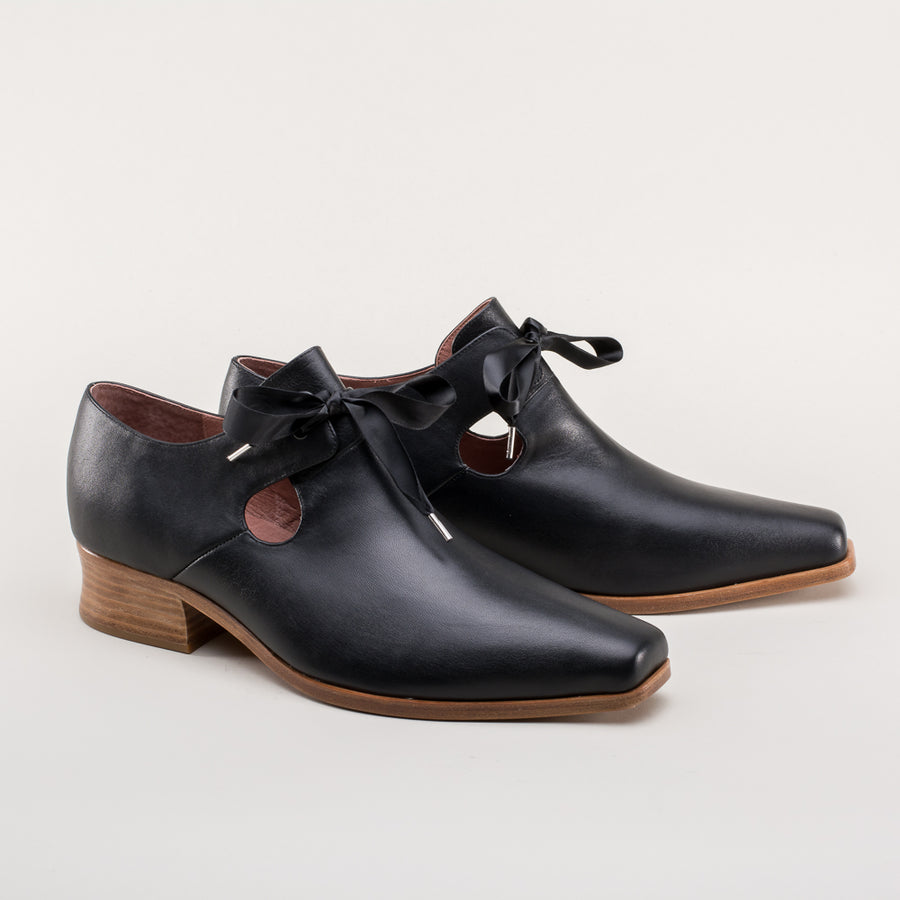
In the first act, my character would doze off in the middle of a speech. In the second, he returned as a vital dandy in pink brocade tights, with an elegant walking stick. The “Method” was no help here, and I was floundering. Fortunately Carlo Mazzone-Clementi was on faculty at this time, and he knew history and style. He took me aside into a large rehearsal room and simply said, “When you are in the first act, you are a fool. You walk with your feet side by side, parallel. But in the second act when you come dressed like a stylish fop, you walk with your feet turned out, like a ballet dancer.”
It was an easy adjustment, and I got my laughs. And learned, once again, that a character’s “mask” doesn’t stop at the neck.
 Commedia dell' Arne