The Mask Doesn’t Stop at the Neck

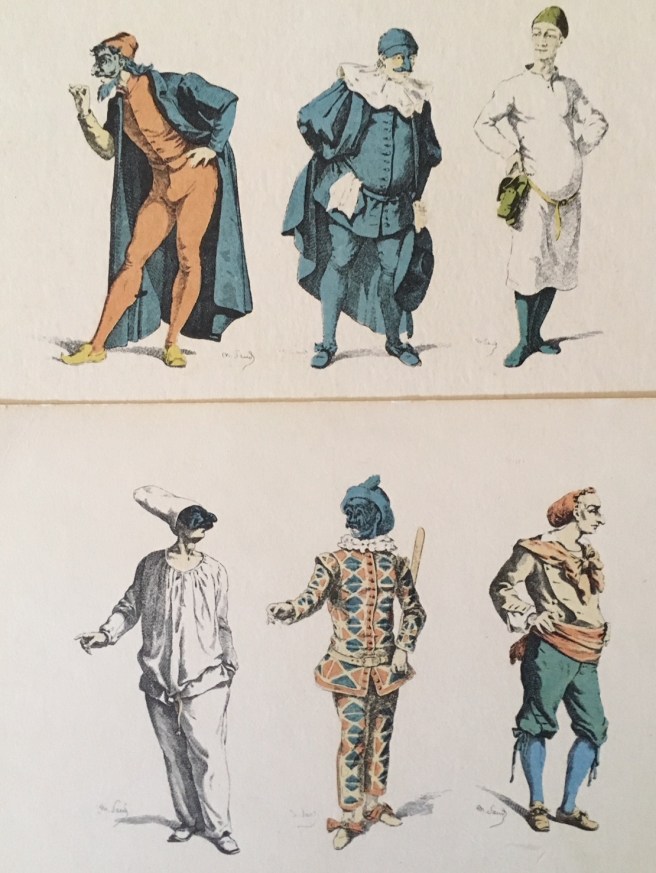
We think of a mask as a covering for a performer’s face – fashioned of leather, wood, paint, fabric or some other material – and expressive of a character. (The mask may cover the face, but as Carlo always said, “The mask doesn’t conceal, it reveals!”) In Commedia, the characters were referred to as masks. This acknowledged that the entire performer was a mask, from head to toe. The physicality of the whole body was synonymous with the mask.

Pantalone’s face features heavy eyebrows over a hooked nose – but you cannot play the character without the tilt of his pelvis, the bent knees and the shuffling gait. The mask on Dottore’s face is little more than a forehead and an impressive nose – but the rest of his mask is his prominent belly, his narrow base (feet too close together to support his girth), and the index finger he waggles to make a point. Arlecchino’s face features a child’s button nose, and the actor supplies the large tongue and the wide-mouthed expressions of wonder. And the feet! Arlecchino’s feet – prancing, skipping or planted – are very much part of his mask.IMG_1211
One of the greatest challenges in teaching physical theatre is to get the performer to support the mask. The mask over the face is only the most distilled part of a spirit that informs every element of the actor’s physicality, movement and rhythm. While we may bemoan the ways in which film has concentrated our attention on the actor’s face in close-up, this total physicality is something that good performers have always instinctively understood. The great English actress Wendy Hiller used to say that she needed to get a character’s shoes right. Once she had the right feet, she could inhabit the character properly.

Physical theatre is alive and well in actors like Daniel Day-Lewis, Meryl Streep, Joaquin Phoenix, Tracey Ullman and Johnny Depp – who instinctively understand the power of supporting the mask even on film.
Isn’t All Theatre Physical?

In the strictest sense – yes, because it involves bodies watching other bodies perform. As Peter Brook famously said, in the opening of his seminal book The Empty Space, “I can take any empty space and call it a bare stage. A man walks across this empty space whilst someone else is watching him, and this is all that is required for an act of theatre to be engaged.”

For centuries, men walked across bare stages – with large physicality, large voices and, often, masks to help convey character, situation and emotion to spectators who might be sitting hundreds of feet away. Eventually they were joined by women on stage. And, some time after that, by scenery.

One can say all that changed when motion pictures came along, but the shift was far from immediate. Silent films are full of physicality, often expressive gestures left over from 19th century theatre, designed to convey meaning to the back row. It was when the talkies arrived, and the camera learned to capture close-ups of the human face, and reveal the smallest flickers of internal emotional states, that performers appeared to start acting from the neck up.
IMG_0348
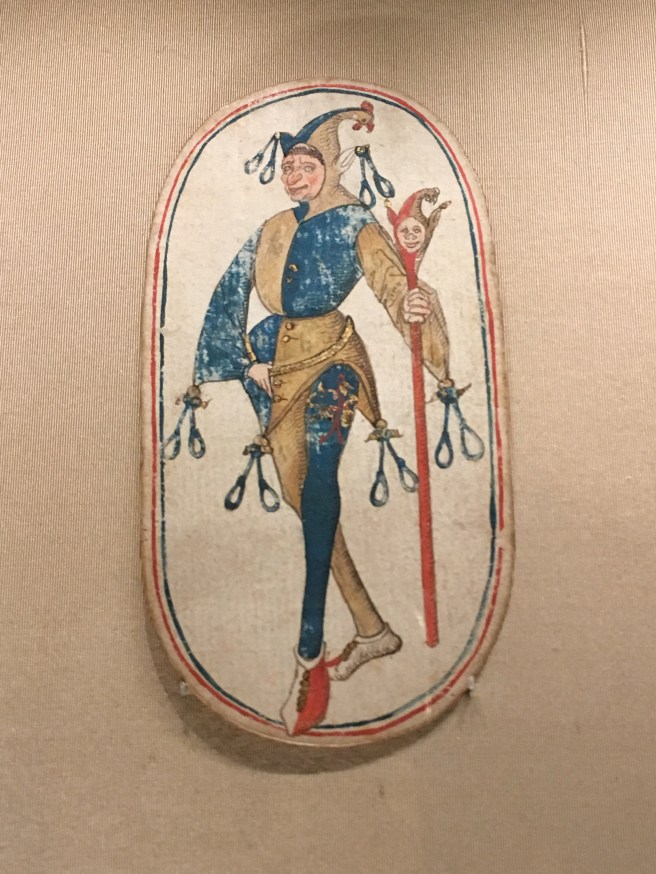
There has been a shift in clowning as well. The jester was the one person in a royal court who could speak truth to power. He had the license to tell the king that the monarch himself was a fool – but he also had to sing and gambol and entertain for all he was worth. His descendant, the stand-up comedian, merely needs to pace the stage with a microphone, and sometimes offer up an impression or two. And those who are speaking truth to power now, the late-night talk show hosts, may simply wear a suit and sit behind a desk.

Does that mean that physicality in theatre, or in clowning, is dead? Far from it.

Is Commedia dell’ Arte the godfather of physical theatre?

Yes – but it is one of many!  Theatre has always been physical.  The naturalistic style of drama, with people sitting around in a domestic setting, talking earnestly or perhaps shouting at each other, is relatively new.  And, for all the great plays that have been written in this vein, it is relatively limited.

From everything we know, the Greek theatre that gave us Aeschylus, Sophocles and Euripides was something like opera today: large in gesture, vocal intonation and spectacle.  The Romans added spectacle of many kinds: chariot races, gladiators facing off, sporting events.  Not theatre?  Are you sure?  Even today, the largest audiences are drawn by the improvisational passion of sports events.  They feature trained ensembles, strong objectives, live interaction with the audience, conflict, high stakes, heroism, dastardly fouls, and epic failure or redemptive success.

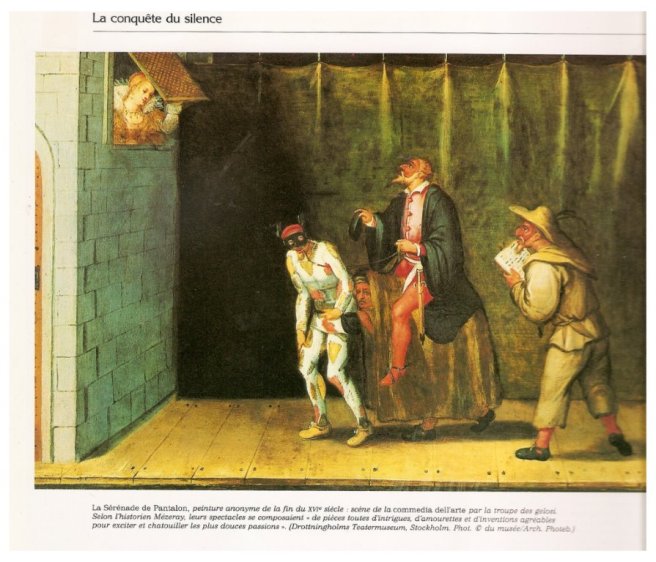
Shakespeare is thought of as a verbal writer, one of the greatest poets in the English language.  Yet his plays could be viewed as a series of crossovers: they are always on the move.  And he made sure that different classes, contrasting characters, and contrasting emotional tones would jostle against each other.  Just as they do in the Commedia dell’ Arte, the Italian style of improvisational street theatre that arose around his time.

commedia-for-emg

In cultures around the world, we find masks, puppetry, storytelling and “total theatre,” invoking the physicality of dance, acrobatics and animal movement.  And this theatrical spirit is unquenchable.  Just when naturalism and “eyeball-level” acting seemed to predominate in theatre and film – lo, the Superheroes are now in the ascendant, with their masks and contradictions and extreme physicality.

The Commedia dell’ Arte is one instance of the spirit of theatricality bubbling up – in this case, in Europe in the late Middle Ages.  Physical, bawdy, transgressive and funny… the spirit of Commedia is still alive in the clowns and standup comics of today.